
Apr . 01, 2024 12:10 Back to list
The Science Behind Activated Carbon Water Filters carbon water filter
Why is the same active ingredient useful in teeth whitening, water filtration, and outer space life support systems?
Activated carbon has swept through the modern world and become an essential component in an enormous range of industries, including medical, cosmetic, and agricultural applications. This versatile ingredient is also a crucial component for the best water filtration systems.
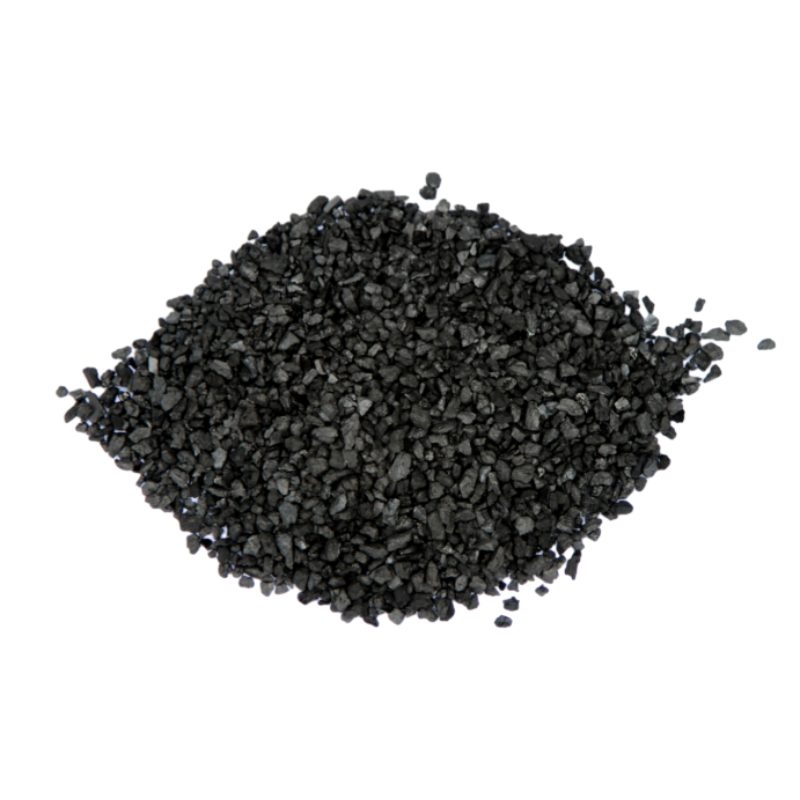
Raw coal crushed activated carbon
But what makes activated carbon so widely effective? Let’s explore the unique characteristics of activated carbon along with why it’s the best choice for water filtration.
What Is Activated Carbon?
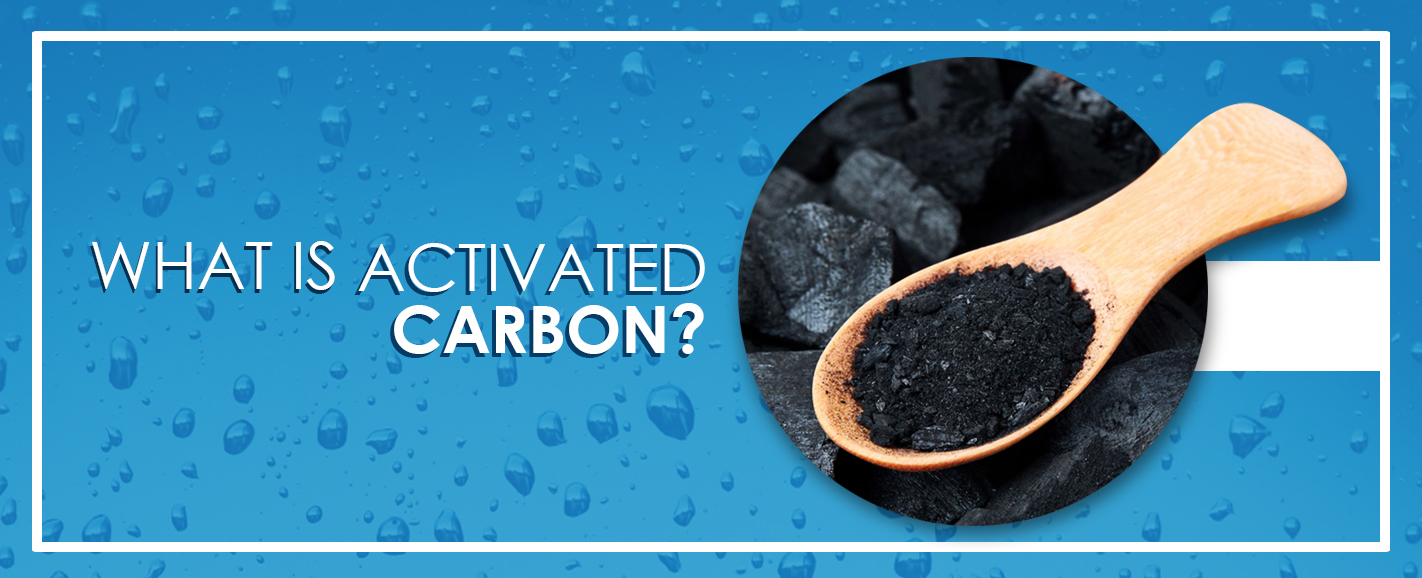
Also called “activated charcoal,” activated carbon is a form of carbon that has been processed to have an incredibly large surface area. Tiny, low-volume pores provide a surface for either adsorption or chemical reactions.
One gram of activated carbon has over 32,000 square feet (3,000 square meters) of surface area — and one teaspoon has roughly the area of a football field. This enormous area alone makes activated carbon extremely useful for a wide range of applications, but activated carbon can undergo further chemical treatment to increase its adsorption properties.
Activated carbon is derived from a carbonaceous source material. Examples include wood, bamboo, sawdust, willow peat, coconut shell, peach pits, coir, petroleum pitch, and a variety of coal. But regular carbon isn’t the same as activated carbon. To form millions of tiny pores across its surface, carbon must first be “activated.”
This is produced by one of two methods: thermal or chemical activation.
1. Thermal Activation
In thermal activation, the source material is formed into activated carbon utilizing hot gases. After being exposed to heat, steam is usually introduced to help open the pores.
Thermal activation is typically done through a process involving reduction of moisture, reduction of volatiles, carbonization, and a steam treatment. This process is carried out in an inert atmosphere using gases such as carbon dioxide, nitrogen or argon.
2. Chemical Activation
In chemical activation, chemicals are added to the raw source material before the carbonization process. Typically, the chemical used is a strong base, acid, or salt. The material is then exposed to heat, and it activates quickly.
Classifying Activated Carbon
Complex and varied, activated carbon is broadly categorized by size, method of preparation, and industrial application. Manufacturers have produced as many as 150 different kinds of activated carbon, but we’ve listed the seven most common types below:
- Granular Activated Carbon (GAC) — Granular activated carbon particles are large, but they have a smaller external surface area than other types of activated carbon. GAC particles are well suited for the adsorption of vapors and gases because they diffuse quickly, and they are often used in water treatment.
- Powdered Activated Carbon (PAC) — Powdered activated carbon has incredibly fine particles made up of ground or crushed carbon. Generally, PAC particles are added directly to other process units, including rapid mix basins, raw water intakes, and clarifiers. They are the particle of choice for carbon block filters.
- Extruded Activated Carbon (EAC) — Extruded activated carbon particles fuse PAC with a binding agent, producing a tough, cylindrical or spherical particle. Due to its low-pressure drop, low dust content, and good mechanical strength, EAC is primarily used in gas phase application. EAC particles are used in CTO filters, which remove chlorine, taste, and odor.
- Impregnated Carbon — These porous carbon particles contain several types of inorganic impregnated compounds such as silver and iodine. Silver loaded activated carbon is often used as an adsorbent in water purification and may inhibit the growth of microbes.
- Bead Activated Carbon (BAC) — BAC is formed from petroleum pitch. Similar to EAC particles, BAC is valued for its low dust content and mechanical strength. Its spherical shape makes it ideal for applications such as water treatment.
- Woven Carbon — Activated carbon can be woven into technical rayon fiber to create activated carbon cloth. The finished material has carbon filtering properties and is used in many applications such as odor absorption and defense.
- Polymer Activated Carbon — With polymer activated carbon, the porous carbon particle is coated with a biocompatible polymer. This gives the finished carbon a smooth, permeable outer shell that doesn’t block its pores. Polymer activated carbon is largely used in hemoperfusion, a kind of medical treatment.
In water purification, activated carbon removes impurities and contaminants through the chemical process of adsorption. But it is used in a wide range of applications besides water filtration. In fact, activated carbon is an essential component in many different industries.
Uses of Activated Carbon
Activated carbon is used in a vast range of applications from gold purification to sewage treatment. Some of the common uses include air purification, hydrogen and methane storage, metal extraction, teeth whitening and other cosmetic products, and air filters in respirators and gas masks.
To fully explain every application of activated carbon would take volumes, so we’ve condensed its many uses into several broad categories:
- Medical Applications — Activated carbon is widely used in the medical community to treat overdoses and poisoning. Additionally, activated carbon capsules or tablets can be purchased around the world to alleviate problems like indigestion and diarrhea.
- Industrial Applications — Activated carbon is used in a broad range of industrial and manufacturing contexts. One common industrial application is in metal finishing. Activated carbon is the primary purification agent for removing impurities from metals like nickel.
- Analytical Chemistry Applications — Because of its high adsorption, activated carbon is often used to purify solutions of organic molecules and chemicals. When combined with diatomaceous earth, activated carbon acts as a stationary phase in the low-pressure separation of carbohydrates.
- Agricultural Applications — Activated carbon has risen in popularity with organic farmers and vintners. In livestock production, activated carbon serves as an additive to animal feed, a natural pesticide, a processing aid, and a disinfectant. For winemaking, it is a processing agent that absorbs odor and undesirable color pigments.
- Environmental Applications — Because of its high surface area and adsorption potential, activated carbon serves a wide range of environmental uses. It is useful in groundwater remediation and spill cleanup.
- Cosmetic Applications — Activated carbon is now a popular ingredient in shampoos, toothpaste, and face masks. The same properties that make activated carbon a wonderful filter make it excellent in cosmetic contexts. It traps toxins and contaminants so they can be washed away.
- Distilled Beverage Purification — In the manufacturing of whiskey and vodka, activated carbon filters are sometimes used to remove organic impurities from the beverage. Activated carbon filters out impurities that affect taste, color, and odor without reducing the alcohol content of the drinks.
- Water Purification — Water purification is a major use of activated carbon. Activated carbon filters are used in both large- and small-scale products. They can remove impurities from large-scale, community-wide water systems as well as smaller scale, residential applications.
- Air and Gas Purification — Activated carbon filters out odors, pollutants, and volatile organic compounds (VOCs) from the air by trapping gas molecules and removing them efficiently from circulation. Also, activated carbon can be used to detect and adsorb radon in the air. In gas purification, activated carbon filters remove odors, hydrocarbons, and oil vapors from the air.
- Mercury removal — Mercury is a common and hazardous emission of coal-fired power plants or industries. When infused with halogens or sulfur, activated carbon traps mercury gas and removes it from the air.
- Gas storage — Activated carbon’s porous surface acts like a sponge for many types of gases. Research suggests activated carbon can store fuel gases efficiently in low mass, low volume, and low-pressure environments.
- Space Technology — Activated carbon is an essential component in the life support systems of spacesuits. The activated carbon filter removes trace contaminants from the flow of oxygen to the astronaut, including body odors.
This is only a sampling of activated carbon’s versatility. Because it is such a useful material, researchers are constantly discovering new applications for activated carbon.
How Activated Carbon Filters Work
Carbon’s effectiveness is largely thanks to its incredible surface area.
Physical adsorption is the main way in which activated carbon filters out a given substance. As liquid or air comes into contact with activated carbon, intermolecular forces draw molecules into the millions of pores and pockets on the surface of activated carbon.
Beyond physical adsorption, activated carbon also facilitates chemical reactions. A common example involves chlorine molecules. When chlorine comes into contact with activated carbon, both molecules react to form chloride ions, effectively removing chlorine from water.
The amount of contamination that activated carbon removes from the air or water depends on many different factors, including the type and amount of pollution, the acidity and temperature of the water or air, and how long the water or air spends in contact with the activated carbon.
The specific type of activated carbon also determines the level of filtration provided. Carbon molecules with large holes trap big and heavy molecules such as the ones found in organic chemicals. Small, fine pores pick up smaller and lighter contaminants. Manufacturers of activated carbon often label their products by their adsorption potential.
While activated carbon is safe to ingest, no trace of carbon is left in drinking water after it has been properly and thoroughly treated.
Types of Activated Carbon Filters
Currently, two types of carbon are most often used for water filtration: powdered activated carbon (PAC) and granular activated carbon (GAC). PAC has a smaller particle size than GAC and is typically more efficient at removing a wide range of impurities from the water.
In most filters, the activated carbon is combined with a secondary element or media such as silver. The added components give the filter additional bacteriostatic properties.
1. GAC Filters
Also known as “fixed-bed carbon filters,” GAC filters are typically cylindrical containers that hold particles of GAC. Water is added to the container and as the water flows through the system, the loose carbon particles filter out impurities.
However, channeling is a common problem with GAC filters. As water enters the chamber, it automatically flows through the container by the path that presents the least resistance. This means carbon particles bypassed by the water are underutilized, reducing the overall efficiency of the filtering system.
GAC filters are also known for growing bacteria. As water flows down frequently traveled “channels” through the activated carbon, pockets of carbon and stationary water remain behind. These areas of relatively stagnant and contaminated water are ideal settings for bacterial growth.
2. Carbon Block Filters
Solid carbon block filters are densely packed blocks of PAC and GAC particles of varying sizes. Water is forced through the pores of the carbon block, and as it travels through the filter, the tiny carbon particles remove a wide range of contaminants.
The primary advantage of block filters over GAC filters is the elimination of channeling. With carbon block filters, the carbon particles are stationary and every particle is used to maximum effectiveness. A wide range of contaminants is removed from the water — small pollutants are adsorbed by the carbon, while larger impurities are too big to pass through the pores of the block and are left behind.
More efficient and effective than GAC filters, carbon block filters do have one drawback — it takes more time for water to pass through solid block filters than through carbon bed filters, which means it isn’t practical for situations where you need a huge quantity of water filtered quickly, such as in municipal water systems. For many households, however, a carbon block filter provides more than enough filtered drinking water every day.
What Carbon Filters Reduce From Your Water
Activated carbon is an excellent filter and reduces a vast number of impurities from drinking water. But what specific contaminants are eliminated by activated carbon filters?
In general, carbon filters remove at least 81 chemicals and are effective at reducing another 52. According to the EPA, activated carbon is the only filtering material that removes all 12 identified herbicides and 14 pesticides, along with all 32 identified organic contaminants.
Activated carbon also removes chemicals, such as chlorine, that affect the aesthetic quality of your drinking water. Most public water systems in the United States contain chlorine as a disinfectant. However, chlorine can lead to an unpleasant taste and smell in tap water as well as create potentially carcinogenic byproducts. Activated carbon filters out chlorine byproducts and VOCs, to produce clean water.
Note that on its own, activated carbon doesn’t remove every contaminant. Certain minerals, salts, and metals can slip through the filter. However, much of this is only true for GAC filters. Carbon block filters are capable of removing many more pollutants, including metals such as lead. Carbon block filters also remove microbiological contaminants from drinking water, including waterborne pathogens. The best carbon block filters reduce pollutants like arsenic, asbestos, mercury, and radon.
While no filter is capable of removing every contaminant from water, carbon block filters come close. Additionally, carbon filtration systems target pollution without stripping water of beneficial compounds like minerals, making your water as safe and healthy as possible.
 French
  English
  Arabic
  China
China  Dutch
Dutch  German
  Japanese
  Korean
  Portuguese
  Russian