
Oct . 02, 2024 05:19 Back to list
Boiling Point of Carbon Monoxide and Its Implications in Industrial Applications
The Boiling Point of Carbon Monoxide
Carbon monoxide (CO) is a colorless, odorless gas that poses significant risks to human health. It is produced during incomplete combustion of carbon-containing fuels such as wood, coal, oil, gasoline, and natural gas. Understanding its physical properties, particularly its boiling point, is crucial for various industrial processes and safety measures.
The Boiling Point of Carbon Monoxide
The low boiling point of carbon monoxide is indicative of its molecular structure and the types of intermolecular forces that exist between its molecules. CO is a simple diatomic molecule, consisting of one carbon atom and one oxygen atom. The primary force at play between CO molecules is dipole-dipole interaction, arising from the polar covalent bond between carbon and oxygen due to their differing electronegativities. This strong dipole moment contributes to its relatively low boiling point compared to non-polar gases, which generally exhibit weaker London dispersion forces.
carbon monoxide boiling point
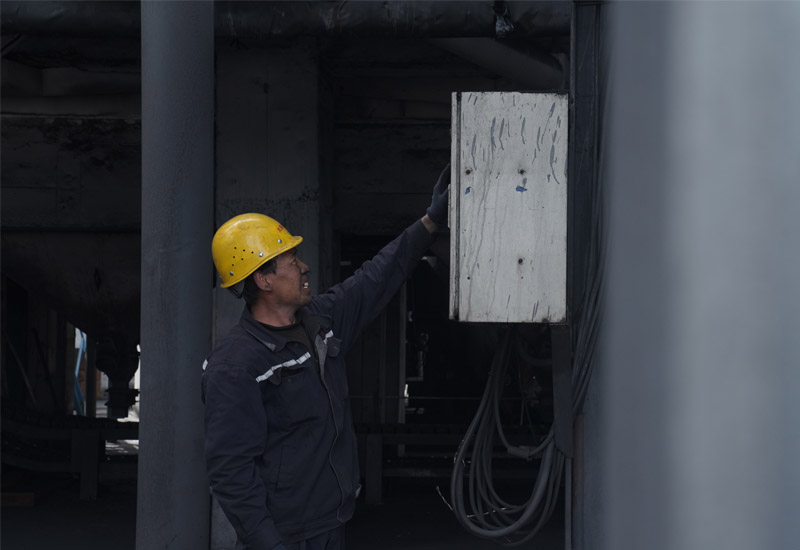
From a practical perspective, the boiling point of carbon monoxide poses both challenges and opportunities. In industrial processes, CO is often produced and utilized at high temperatures, which necessitates careful engineering to avoid unintentional gas formation or condensation in unwanted areas. Lab environments must be meticulously controlled to ensure that CO remains a gas and is handled safely. The low boiling point means that CO can easily transition from a gas to a liquid under the right pressure conditions, which is crucial for its storage and transportation.
Moreover, the vibration of carbon monoxide molecules at different temperatures significantly influences its behavior in combustion reactions. In the presence of sufficient heat, CO can combust with oxygen to produce carbon dioxide (CO2) and release energy, which is a fundamental reaction utilized in energy production and various chemical industries. Hence, knowing the boiling point of CO helps industries in designing better combustion systems and implementing safety protocols for handling this toxic gas.
In conclusion, the boiling point of carbon monoxide at -191.5 degrees Celsius not only defines its physical state under standard conditions but also influences its applications and handling in industrial settings. Recognizing the inherent risks associated with CO, along with its physical properties, is central to ensuring safety in both laboratory environments and real-world applications. As we advance in technology and industry, understanding the behavior of gases like carbon monoxide remains critical for enhancing efficiency and preserving human health.
 Arabic
  English
  China
China  Dutch
Dutch  French
  German
  Japanese
  Korean
  Portuguese
  Russian